Calm Is Strategic
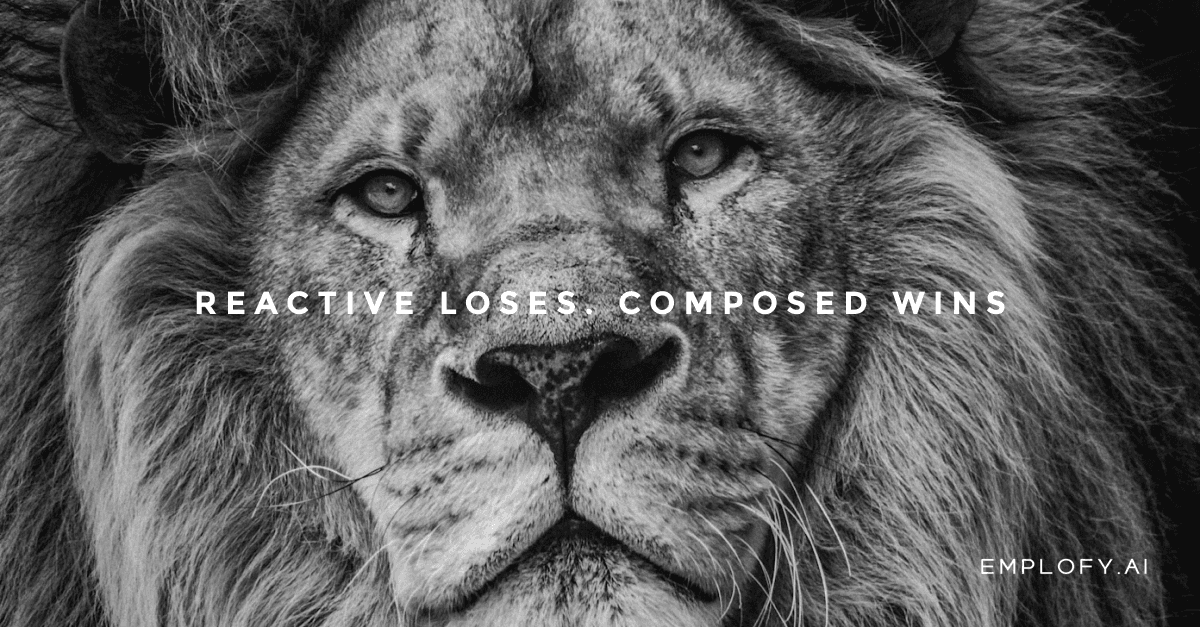
Why clear thinking beats reactive decisions in uncertain environments
Calm is often misunderstood. It is seen as passivity, hesitation, or lack of urgency. In reality, calm is a strategic advantage.
To stay calm does not mean to slow down. It means to think clearly and choose better moves.
In unstable environments, whether in hiring, business, or personal decisions, anxiety becomes contagious. Markets shift, signals change, expectations become unclear. The natural reaction is to respond quickly, adjust constantly, and avoid missing opportunities.
But speed driven by anxiety rarely produces good outcomes.
Reactive decisions are usually made with incomplete information. They prioritize immediacy over accuracy. They feel productive in the moment, but over time they create inconsistency and noise.
Calm works differently.
When decisions are made from a structured perspective, they are not rushed. They are deliberate. There is an understanding of what matters, what is being tested, and what outcome is expected. Even if the environment is uncertain, the approach remains stable.
That stability compounds.
Over time, calm decisions begin to outperform impulsive ones not because they are more aggressive, but because they are more consistent. They reduce unnecessary changes, preserve clarity, and allow patterns to emerge.
This is especially visible in systems that depend on interpretation. Hiring is one example. When teams react to every new signal, they lose alignment. When they stay structured, they improve decision quality without increasing effort.
The same applies to individuals.
Calm creates space between input and action. In that space, better judgment appears.
In the long run, stability is not a limitation. It is an advantage.